14 April 2015

Japan Day 6: KYOTO part 2A (Arashiyama and Philosopher's Path)

We woke up quite early, activated our first wifi connection to Kyoto City free wifi, bought our breakfast at nearest Lawson (to be eaten later), and used our One-Day-Pass Bus Card to go to Kitanohakubaicho Station (a Keifuku / Randen line station). We passed our card to a machine in the bus when we took off, then the machine will print the date on card's blank space. Next time we used it, we only had to show the card to the bus driver. Using a Randen train, we went to Arashiyama Station (transit once at Katabira no tsuji Station). In this Japan Guide link, you can find major information about Arashiyama and how-to-get-there.

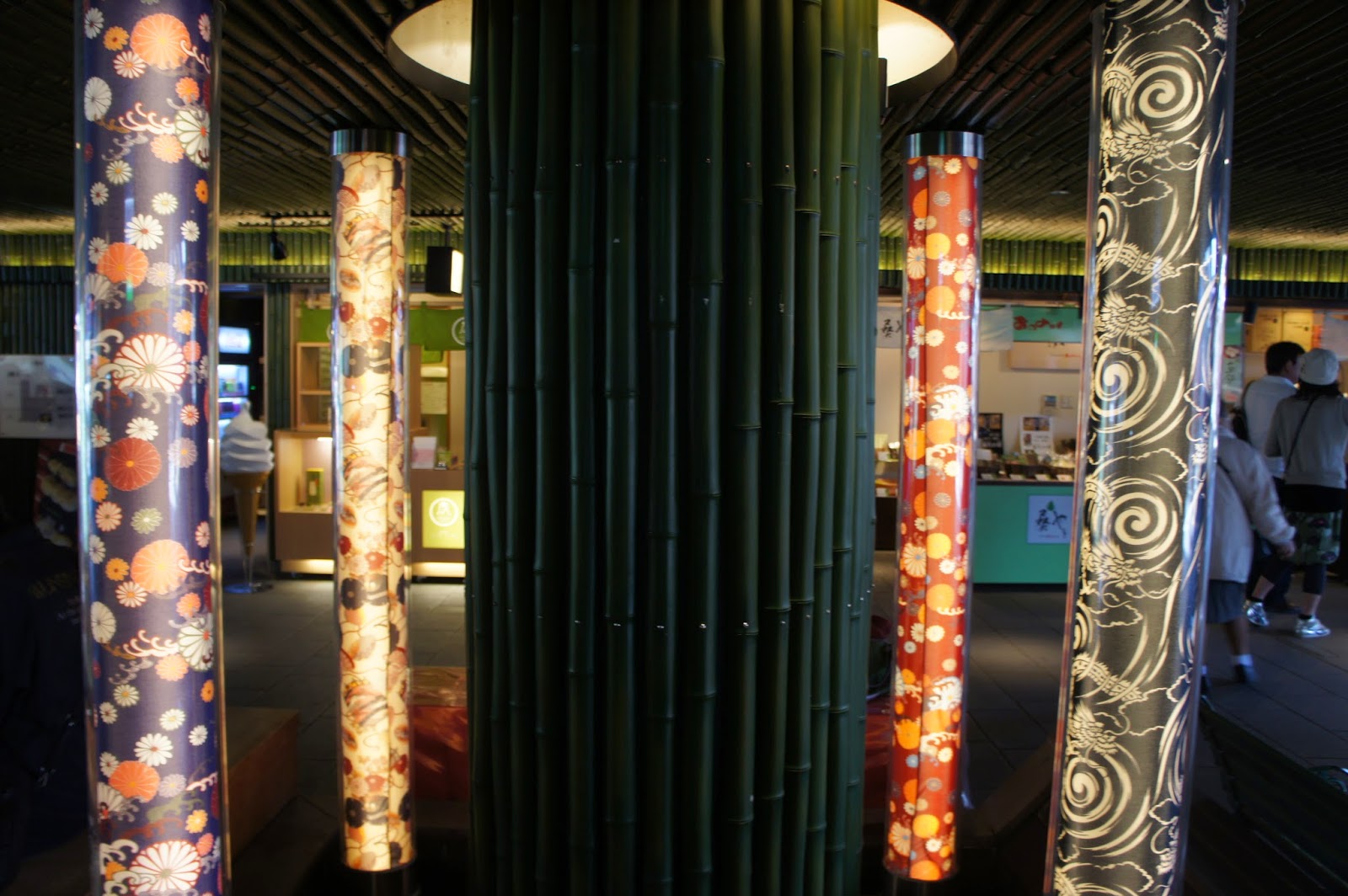
What I anticipated so much to see was obviously riding the Randen tram and seeing the sakura tunnel between Utano and Narutaki Stations (prepare your cam, lads!). Here you can read a lot about Randen, a romantic way to do sight-seeing in northern Kyoto and Arashiyama. When we took off at Arashiyama Station, some Yuzen pillar shape already waited. Next time I'd like to go there at night to see illuminated Kimono Forest with its beautiful kimono patterned pillars. The sakura tunnel is also illuminated during 1st and 2nd weeks of April! This blog provides more beautiful pics.

 
They look like beautiful giant tumblers!

map
Here is an Arashiyama map from Hankyu.co.jp. We took our own path, though.
We arrived at Arashiyama Randen Station. First of all, of course, we went to the Bamboo Forest aka Bamboo Groove. Peaceful, even with so many travelers around us. There was a couple taking wedding pics on a rickshaw, so cute!

We ate our breakfast at the end ot the bamboo path then walking around Kameyama Park. The spring blossoms there was sooo beautiful!
A nice Japanese lady took a pic for us; she was an avid traveler and loved Bali so much!


From Kameyama park, we continued our walk along Oi (Katsura) River toward Togetsukyo Bridge. We watched some boats riding along the river with their guides shouting funnily in Japanese. The river was clean, I was so envious with Japanese people's cleanliness.


Togetsukyo Bridge
When we approached the bridge, the road was more crowded. There were two pretty maiko walked in front of us. Poor girls, they were surrounded by people who tried to take pictures with them and shoved their cameras in front of those girls' faces. We didn't take any pic of them.
After crossed the bridge, we arrived at Nakanoshima Park (aka Arashiyama Park). Many people were already there, picnicking under sakura trees. We bought a macha ice cream and enjoyed the view before we looked for lunch. At the road near the park, there were several restaurants.

People picnicking at Nakanoshima Park
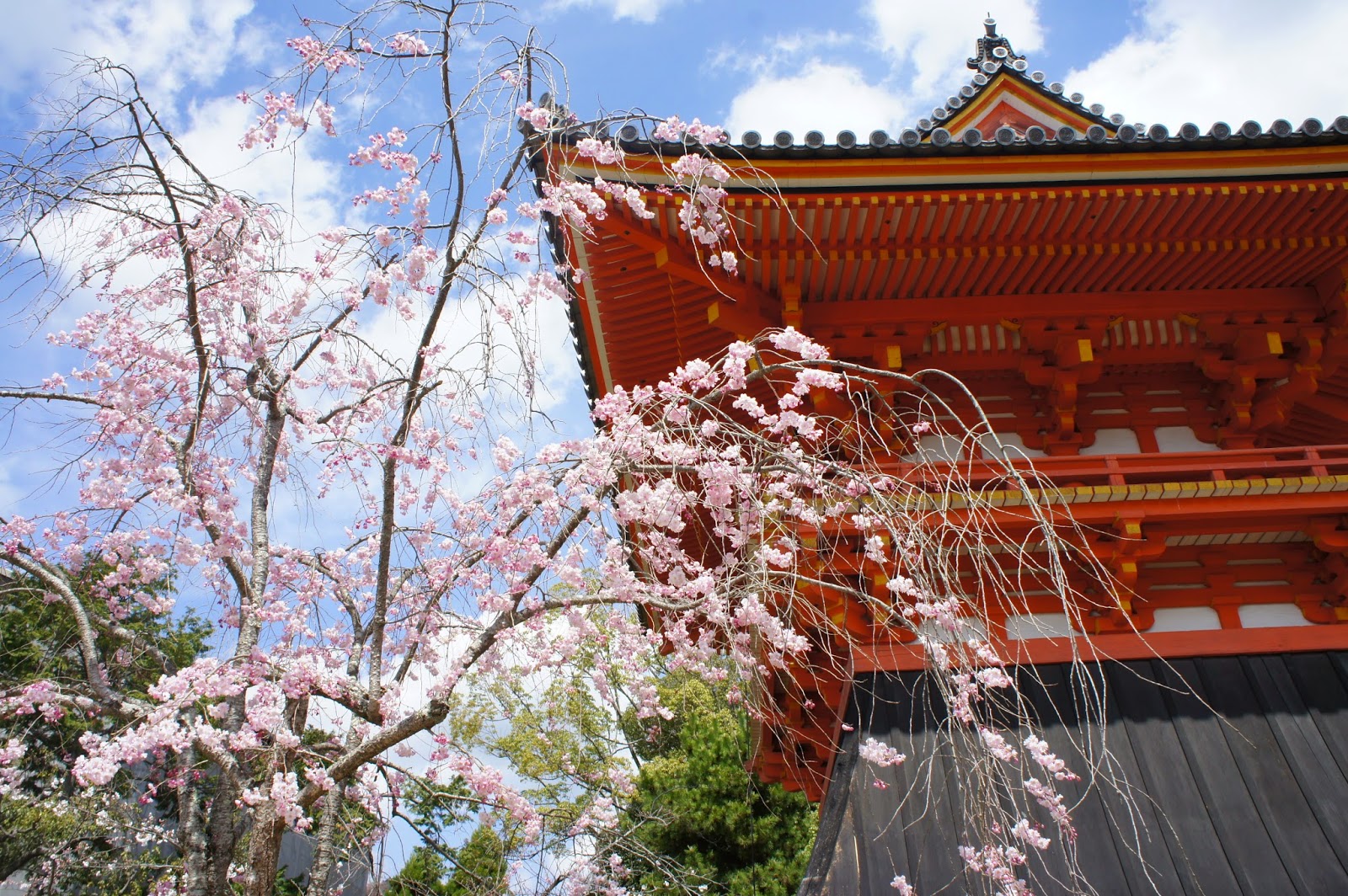
Blue sky and sakura blossoms. Blissful!

Traveling during pregnancy was a bit troublesome aka riweuh. I got hungry all the time but my appetite always dropped when I smell something too flavorful like onion and garlic (which were my fave seasonings before pregnancy came). I also didn't fancy red meat (I could only ate fish, chicken, and pork) and spicy foods because of heartburn. Another factor was the price, LOL. I didn't want to spend too much money on common culinary *tsaaahh*. Thank God we found a resto with affordable prices (around JPY 1,000 per pax) and quite good taste.


We ended our journey in Arashiyama (yep, decided that we didn't have to see the temples etc) and hopped on a bus to Philosopher's Path. We took off at the Ginkakuji bus station and followed the crowd. It wasn't hard to find the path, we could saw its sakura trees not far from the bus stop (we only had to cross the street once).


There were several cafes and food truck and stalls along the way. We bought some post cards from a street artist; his paintings depicting the views of Tetsugaku no michi were very beautiful. We already agreed that we didn't have to finish the path, since it was approximately 2 km long and I usually got tired easily. But hey! The path was too gorgeous and very enjoyable that we finished it unknowingly! *proud* My only regret was that we didn't take plenty enough water. There weren't many vending machines on the path (and most of them were sold out).

We continued our journey to Kiyomizudera by bus (there was a bus stop near Nanzenji).

to be continued to the next part

13 April 2015

"Bayi Kamu Terlalu DIMANJA!"

Si ndutku sukanya digendong sejak lahir. Kalo menurut tetua di keluarga, dia 'bau tangan'. Weekend adalah saat-saat dia nemplok sama saya, bahkan milih enen daripada makan. Kalau saya 'ngilang' bentaar aja, dia langsung gogoakan panik. Ketika usianya sekitar 6 bulan, dia pun mulai nangis-nangis kalau digendong sama orang yang nggak biasa gendong dia. Kalau kemauannya nggak dituruti, pasti dia merengek. Beberapa orang pun mulai mencap anakku 'terlalu dimanja'. So what? *gaya pongah menantang*
Dari parents.com:
This phenomenon of being so attached to one person that a baby mistrusts all others is called separation anxiety. Most babies suffer from it in varying degrees between 7 and 9 months, even if they were chortling in the arms of any stranger just a month ago.
Don't worry, though. "Separation anxiety is a sign that your baby is emotionally attached to someone and that's a very positive development," says Robin Adair, MD. Some evidence suggests that the onset of this powerful attachment to the most important people in their lives is associated with a spurt in brain development between 6 and 12 months. Studies also support the idea that your baby's earliest emotional bonds are the foundation for healthy relationships later on.
Tuh kan. Separation anxiety tuh normal, toh kita pun sedari dini tetap berusaha ngajarin si kecil buat sopan sama orang lain. Anakku tetap ramah kalau ketemu tetangga, kasir supermarket, dan tukang sayur langganan karena rutin setiap hari ketemu. Sekarang ini setiap saya berangkat kerja, pasti saya pamitan dan si kecil dibawa neneknya mengantar saya sampai depan rumah, dengan harapan dia ngerti kalau mamanya pergi untuk kembali *kiss bye dari Om Ello dudududududuuu*. Kalau dia ketemu kerabat atau teman kami pun, pasti kami kenalkan 'ini temen papa mama, ayo kenalan'. Ke depannya semoga dia juga belajar bersosialisasi lebih baik.   

PS: Jujur, saya lebih suka si kecil pilih-pilih digendong siapa, karena males aja kalo dia digendong-gendong orang nggak dikenal. Mending kalo bersih. Beberapa orang bisa maen cipak-cipok towal-towel anak orang, nggak mikir tangannya penuh bakteri, atau mulut dan bajunya bekas asap rokok. Hiiiihhh!

From NATGEO:
The researchers found that children who received more attention and nurturing at home tended to have higher IQs. Children who were more cognitively stimulated performed better on language tasks, and those nurtured more warmly did better on memory tasks.
They found a strong link between nurturing at age four and the size of the hippocampus — a part of the brain associated with memory — but found no correlation between nurturing at age eight and the hippocampus. The results demonstrated just how critically important an emotionally supportive environment is at a very young age.
Exposing children to more words would seem simple enough. But language delivered by television, audio book, Internet, or smartphone, no matter how educational, doesn't appear to do the job. That's what researchers led by Patricia Kuhl, a neuroscientist at the University of Washington in Seattle, learned from a study of nine-month-old children.
TUUUHHH! Yah sebenernya despite of seberapa tinggi nantinya kecerdasan si anak (yang nggak saya targetin gimana-gimana juga kok), saya teramat sangat menikmati bonding sama si kecil. Nggak selamanya dia bisa digendong ke mana-mana *enak toh? asik toh?* dan nggak selamanya dia mau dipeluk cium terus-terusan *nyiapin mental denger kalimat 'aku udah gede, Mama, malu ah'*. Selagi bisa, saya mau puas-puasin nempel sama si kecil. 

Kok anaknya nangis merengek melulu kalau jauh dari orang tua dan neneknya? Ya wajar dong, dia kan belum bisa manggil dan belum bisa nyamperin. Mau gimana lagi kalau bukan nangis? Nantinya kalau dia udah bisa bicara juga, nggak mungkin kami biarkan dia sedikit-sedikit nangis. Pasti kami ajari buat menyampaikan maksudnya tanpa rengekan (bahkan sekarang pun sudah sering kami nasehati demikian; diasumsikan anaknya ngerti).

Jadi... emang kenapa kalo anakku dimanja? She's a baby; dia berhak buat bermanja-manja. Kedisiplinan bisa saya perkenalkan melalui rutinitas membersihkan diri, makan dan tidur teratur. Ketika dia sudah menginjak usia toddler nanti, saya yakin dia akan sibuk minta mengerjakan semuanya sendiri. Sekarang masih waktunya buat kami yang memenuhi permintaannya. Melihat dia sering nangis merengek kalau minta dipeluk dan digendong, silakan saja mencap anakku manja. It's my privilege to spoil my baby in a healthy way.


Never fear spoiling children by making them too happy. Happiness is the atmosphere in which all good affections grow.
~ Thomas Bray

08 April 2015

Japan Day 5: KYOTO part 1 (Kinkakuji, Ninnaji, Fushimi Inari Taisha)

Itinerary: Kinkakuji and Ninnaji Temple
               Fushimi Inari Taisha
               Dinner at Gion

It was officially our first day in Kyoto (since we spent the previous afternoon and night only to rest). In the morning we hurried to take a bath (soooo cold!) and went to Kinkakuji Temple. Just 15 minutes walk from our rented room! Oops, before we went out, we used our rented room's wifi to request for free Kyoto wifi by sending a blank e-mail to guest@inf-kyoto-city.info, then they sent us Guest Code to be used. Here you can find several ways to get free wifi in Kyoto. Funny that we couldn't connect without Guest Code and we need access to internet (to send and receive it by e-mail). Guest Code is also only valid for 3 hours so we used every e-mail address we had! The signal was only good in several spot too so we had to turn off the connection when not used (to safe batteries)

Entrance fee to Kinkakuji was JPY 400. Here is the link to Japan Guide info about the temple. We got there at around 9 AM and there were already many tourists queuing! We had to try hard to get photos of Kinkakuji without obstruction from other pic-taking tourists hehehe.

Kyoto's esteemed Kinkakuji (Golden Pavilion) and our esteemed clear pic of it *smug*
Following the path, we were taken behind Kinkakuji to its garden. I could imagine the retired Ashikaga shogun who built this building and garden sitting there, drinking tea, and enjoying his retirement. After his passing away, the building was used as a temple. Kita juga mau deh pensiun tinggal di rumah emas hihihi!
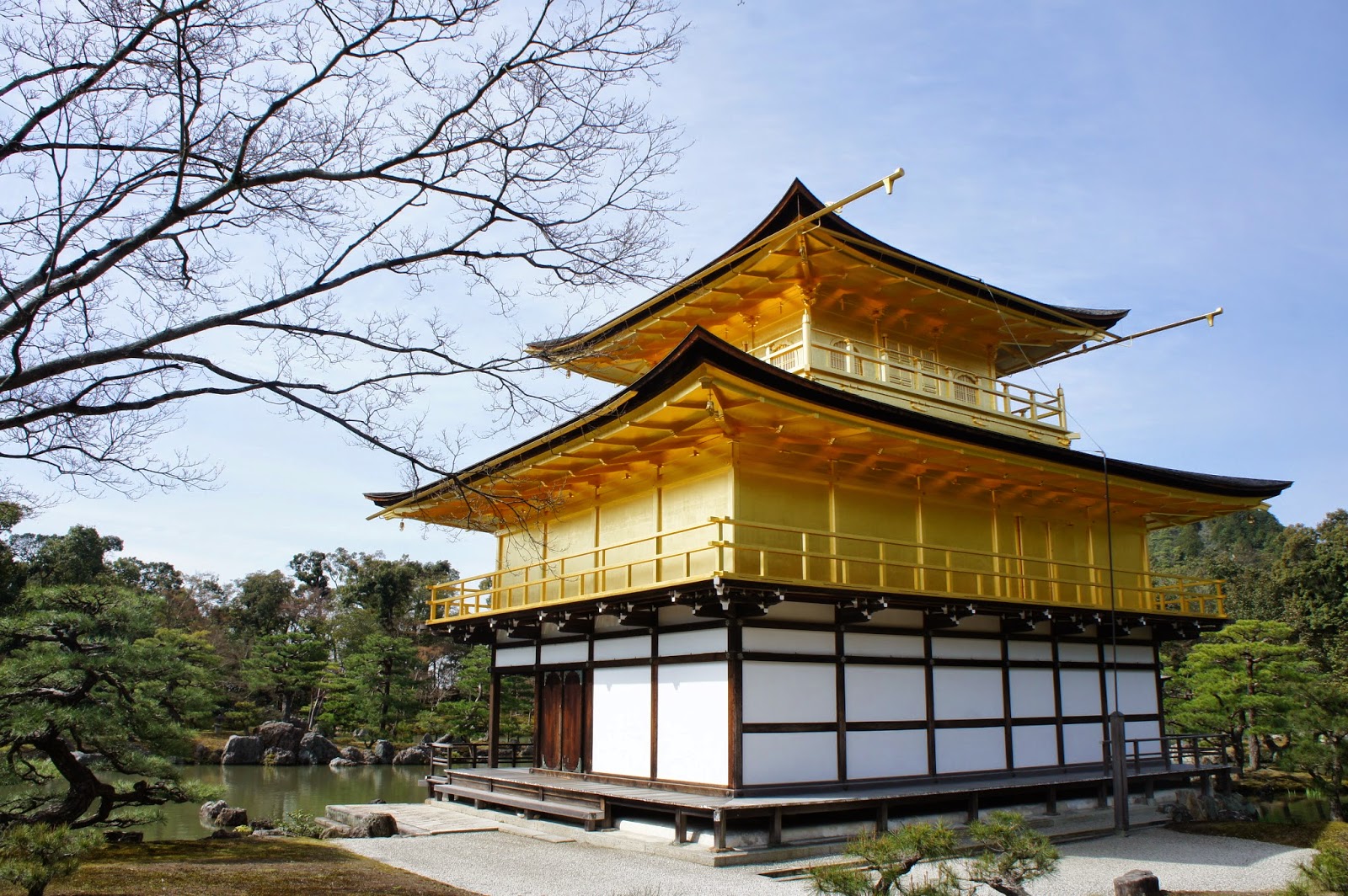
Kinkakuji's golden butt, sexy eh?
Garden and pond behind Kinkakuji
I LOOOVE seeing ema (wooden wishing plates)  PS: I know, my hair was a mess but I deliberately make it grow long during pregnancy!
Omikuji vending machine!
I considered Kinkakuji small, it only took us 30-40 minutes to get around. Uhh balikin duit gue! My hubby and I decided to see another temple nearby. There were many other temples near Kinkakuji (Ninnaji, Ryoanji, Daitokuji, and many smaller temples) but we decided just to see Ninnaji. Why? Because we don't want to spend too much time and money hehe... Ninnaji is interesting since it's said to have beautiful sakura trees. Ryoanji is also very famous for its zen garden but we were more interested in sakura. Both are UNESCO world heritage sites and reachable by walking for about 30 minutes from Kinkakuji.
The road to Ninnaji from Kinkakuji, very peaceful

It turned out that Ninnaji is HUUUGE! 

 map
Entrance fee to Ninnaji was free (except during sakura blooming season; visitors had to pay JPY 500) but visitors had to pay JPY 500 to go into Goten area all year long. We already paid for entrance fee to Ninnaji so we decided that we didn't have to go inside Goten (which I read somewhere is more beautiful in autumn and has no sakura trees).

We entered from its parking lot (Higashimon Gate) at east side (thank goodness there was a restroom there!) then walked around the southeastern area and got out from Niomon Gate at south side.
Sakura blooms near Ninnaji's Higashimon Gate


Cantik kaann (sakuranya)?
Buddha Statue
Kondo (or Miedo? duhh maap lupaa)
Bell fry (designed as such the bell couldn't be seen from outside)

36-meters-high five-storied pagoda
Ninnaji has a famous garden of Omuro Sakura, a type of sakura that blooms later than general sakura (in mid April to beginning of May). If you visit Kyoto during that period, you can still seek for sakura blossoms at Ninnaji! There were about 200 trees in Ninnaji precinct. They had distinct features of short stature and low branches that seemed like they sprout from the ground. Despite of its being small and short, they were already there since early of Edo period!
Omuro sakura trees, the late bloomer
They were still bare when we came at the beginning of April
I really love the history of Ninnaji. Its construction was started on the second year of Ninna (886) to fulfill an emperor's wish and finished 2 years later (after the emperor passed away). The next emperor became Ninnaji's head priest after he abdicated and he built a residence in the precinct that was called Omuro (that's why its sakura trees were called in the same manner). Many of his successors also became head priests there for generation; that makes Ninnaji the highest ranked monzeki temple in Japan. Monzeki is Japanese Buddhist priests from aristocratic or even imperial backgrounds.

Both Ninnaji and Candi Borobudur in Indonesia were Buddhist but very different in architectural styles, which were very much influenced by their respective cultures. Ninnaji was about 60 years younger than Candi Borobudur (which was built in about half a century) but it's a shame that none of its original buildings from the 9th century survived. 

Ninnaji had been burnt down several times during many feodal wars. Its reconstruction was funded by many famous samurai, including famed fiery daimyo Oda Nobunaga and the Tokugawa third shogun Iemitsu. Many of its building also built from materials of other imperial buildings, such as Kondo (main hall) was an alteration of Shishinden (coronation hall of the Imperial palace) and Miedo (founder's hall, used to keep the bodies of its former priests) was built using materials of Seiryoden (Imperial Palace pavillion). In 1887, the buildings of goten were burnt down and rebuilt about two decades later, which could be seen as they were now.

Okay. I need to stop ranting about history here. (^^)

Niomon Gate seen from outside of Ninnaji complex
By the time we got out of Ninnaji, I was already in terrible mood due to (pregnancy) hunger. I could eat my hubby right there! Perhaps he was afraid to be bitten too so he hurriedly took me to find lunch (or rather, late breakfast). I was already pretty devastated (seriously) when we didn't find any interesting food stalls or resto on our way to big road (we planned to meet our friends at Kyoto Station). But an angel came out of nowhere! A lady stopped us at the pedestrian and asked us to stop by at her curry shop. The menu was hand-made! We followed her to her nearby shop; it was very small but empty. We guessed that the cook was her husband and she acted as waitress. There was a pretty little girl sat nicely at the bar table (perhaps their daughter). I couldn't find their shop's name in the menu but when I checked 4sq, it was Family Kitchen! Very suitable!

Hand-written menu

My Indian chicken curry (front) and hubby's hot keemd curry (back)
And we experienced the most delicious curry in our lives! They were served with fresh rocket salad. I wanted to steal their vinaigrette recipe! We left happily with full tummy and praised the cook a lot.

We took bus from Kinkakuji Mae (Kinkakuji Road) to Kyoto Station and met our friends there. In Kyoto, most prominent city transportation mode is bus, with flat rate JPY 230. You can learn more about it here. But we must be ready when buses are slow due to traffic or packed (e.g. at Gion). We can use trains and subways too but their routes are more limited.

We took the chance to buy Starbucks Kyoto tumbler, which was widely known as one of the prettiest Starbucks city tumblers. As usual, we'd get a free beverage for purchasing a tumbler so we chose lemon vanilla frappuccino which was only available in Japan; it was very sweet. Hmmm, exactly what we needed, a full-calorie drink when we climbed Fushimi Inari's lairs that afternon.
Pretty, eh?
We also bought Kyoto One-Day Bus Cards (JPY 500 each) at Kyoto Bus Information Center in front of Kyoto Station. 
- The ticket was empty and could be used that day, or the next day, or even the next week. 
- However, the ticket only valid in the same calendar day since its first usage.
- Unlimited use in central Kyoto and Arashiyama.
- It can be bought from bus drivers but there is a risk that they run out of cards so we chose to buy it from Info Center.
- It's most useful if the user uses buses 3 times a day or more.
We bought 2 tickets for each person to be used on our next days in Kyoto.

There are also other one-day passes available, you can learn about them here.

We took JR Nara line train (5 minutes, JPY 140 one way) and walked for 5 minutes to Fushimi Inari Taisha. Entrance fee is free (yipeee, biasalah maniak gratisan). I read about this place a lot in mangas so I was very excited!
A not-so-talented photographer took our pic, gemez ahh itu torii-nya kepotoong!
*lirik tajam Rudy*

As mentioned so many times in mangas, this is the biggest Shinto shrine dedicated to Inari, the god of rice. Inari's messenger is fox (kitsune) so there were many fox statues around the shrine. I imagine them suddenly came alive and talked to us (which we won't understand at all coz they spoke in Japanese). The entrance gate was called Romon and donated by 'the monkey' shogun, Toyotomi Hideyoshi.
Waiting for Kitsune-san to move, LOL

Inside the shrine compound
Torii ema, very vibrant and beautiful! Must be hard to write on them.
Kitsune ema. It came blank so the wishers can use their creativity to draw faces on them. Creepy and funny!

Behind the shrine compound, there was a hiking trail to the top of the hill which became so famous for its Senbon Torii (thousands of gates). They were donated by individuals, families, and corporations; we could see their names and date of donations behind each torii. The smallest torii costs about JPY 175,000 and a large one can cost more than JPY 1 million!
 
The inscriptions behind those torii were beautiful!

There were many tourists trying to get good spot to take pics. Better use your time to walk ahead of them (there are usually smaller pic-taking crowds ahead) rather than to wait for them to leave. It took 2-3 hours to reach the summit and I had no stamina to do that. It was getting dark too so my hubby and I got back to the shrine while our friends continued their hike. We tried some snacks while we waited them to come back.

Didn't buy the ice cream, though, due to the cold weather. But people still queue for it!

Oishii! The tako inside it was big!

Yakitori. Quite expensive but smelled so good! A bit tough too.
Our friends took a very long time to come back (and had no internet access so we couldn't contact them). We worried and almost asked an officer before they finally appeared, exhausted and hungry. Yep, they were lost. They also bought some snacks before we headed back to the city to have dinner.

I forgot to mention, the restrooms at the shrine was A MESS! Very disgusting, smelly, full of trashes. Some tourists didn't even flush! Urrgghhh! It was not possible for me to use it. I blame the Chinese tourists. There were many of them that day. Yes, I generalize, but many Chinese people still do that and be very unhygienic in this modern day. You make me ashamed, people with same ancestors! I had to wait until we reached the station to do my business. 

We got back to Kyoto Station and continued our journey by bus to Gion. It was 7 PM and Gion was very crowded, but the sakura trees were beautiful. I didn't take many pics because I was already very hungry (again).
We entered a ramen shop and ate there. It was so-so, not suitable to our taste. We said goodbye to our friends and got back to our rented room to get some rest.

07 April 2015

Haruskah Bayi Merangkak?

Menurut beberapa informasi yang saya baca: TIDAK.

Hureeiiii....

Ya biasa lah, first-time-paranoid-mother like me ketakutan liat anaknya nggak ada tanda-tanda mau merangkak selagi anak seumurannya udah pada heboh exploring ke sana ke mari. Ya mungkin emang delayed sih... karena in overall, milestone si ndut ini mundur sekitar 1-2 bulan dari standard developmental milestones bayi-bayi lain (mungkin akibat lahir prematur PLUS gemuk), tapi saya sempet waswas juga. Beberapa teman cerita soal bayi yang skip merangkak karena keseringan digendong. Begitu belajar jalan, bayinya jadi nggak seimbang dan/atau nggak punya refleks buat nahan diri dengan tangan ketika jatuh. Auuch!

Jadi seperti biasa, saya (the Google mom yang cuma mau percaya yang bagus-bagus tapi denial kalo baca situs yang ngeri-ngeri) googling. Panduan utama saya tentunya situs What To Expect yang udah saya percaya sejak jaman TTC, hamil, dan pasca-lahiran. Sumber-sumber bacaan saya yang lainnya antara lain: Baby Center dan Kidspot.

Buat yang males buka linknya, berikut ringkasannya:
  1. Kebanyakan bayi mulai merangkak di usia 6-10 bulan, tapi banyak juga yang tertunda hingga usia setahun atau bahkan tidak merangkak sama sekali.                       
  2. Tidak seperti duduk, merangkak bukan skill yang harus dialami setiap bayi, terlebih jika bayi menunjukkan masalah dalam perkembangan motoriknya. Contohnya: bayi dapat duduk tanpa bersandar (walau mungkin masih suka miring-miring lalu jatuh ngegabruk), memegang barang dengan kedua tangan, menggunakan kedua pasang tangan dan kakinya, berguling menelungkup dan telentang, berdiri atau menjejak di kedua kaki jika dibantu (dipegangi atau ditahan menggunakan mainan seperti jumperoo dan static walker).                                            
  3. Merangkak dapat dilakukan dengan berbagai cara, nggak cuma usual style yang menggunakan kedua lutut dan kedua tangan. Beberapa bayi ngesot di pantat (like me and my papa when he was a baby; prinsip kami kan biar lambat asal selamat). Yang lainnya pake yoga doggy style: kaya posisi nyembah tapi kakinya ndorong. Beberapa bayi pakai tripod style: gerakin kedua tangan dan 1 lutut, kaki satunya lagi diseret. Ada juga yang commando style: merayap pakai tangan, perut dan kakinya diseret (mayan ya buat ngepel lantai). Banyak juga bayi yang merangkak mundur atau malah guling-guling aja sampe tujuan (nah ini anakku banget; enak lah dia ngegulundung secara badan udah kaya bola). Bayi juga suka gonta-ganti gaya merangkak dan semuanya lucuuuk. Siapin kamera!
  4. Untuk bisa merangkak, bayi perlu memiliki 3 hal: kemampuan mengendalikan leher dan kepala, duduk tanpa bersandar (yang artinya tulang belakangnya sudah kuat), dan koordinasi bagian kanan dan kiri tubuh (biasanya bayi melakukan onggong-onggong alias crawling position sebelum mulai merangkak; ini adalah fase pembelajaran ketika si bayi belum bisa mengendalikan bagian kanan dan kiri tubuhnya).
    Euis lagi onggong-onggong; bingung ni yee
  5. Sekali lagi, MERANGKAK TIDAK DIHARUSKAN. Milestone yang sesungguhnya adalah usaha si bayi untuk menjelajah secara mandiri dan meraih hal-hal yang menarik minatnya. Ortu baru harus kuatir jika anak tidak menunjukkan ketertarikan ke sekitarnya.
  6. Namun demikian, merangkak juga punya beberapa kegunaan.
  • Memperkuat otot lengan, tangan, dan kaki.
  • Melatih koordinasi tangan dan mata, yang mana akan membantu ketika kelak dia belajar membaca dan menulis, seperti halnya aktivitas fisik semacam menendang bola dan lompat tali.
  • Mengembangkan kemampuan visual ketika si bayi belajar menavigasi area di sekitarnya. Kemampuannya memahami jauh dan dekat meningkat ketika matanya belajar beralih dari hal di depannya ke sesuatu yang jauh.
  • Membantu terjadinya koordinasi otak kanan dan kiri. Otak si kecil terstimulasi untuk memproses gerakan dan berpikir secara bersamaan.
  • Meningkatkan keseimbangannya.
  • Bayi belajar meraih benda yang berada di luar jangkauannya. Hal ini akan membantu mengembangkan kemampuannya memecahkan masalah.
Well tapinyaaa.... beberapa expert (menurut Kidspot) bilang kalo merangkak 'is a critical milestone for motor development and point to evidence that education and developmental problems such as ADHD and dyslexia have been linked to babies who never crawled or crawled for only a short time before walking'. Hihhh... tapinya saya rasa ga bisa digeneralisir juga kan yah! *maksa* Masa semua bayi yang nggak merangkak tuh ADHD dan dyslexia sih? Yasud demi amannya mah si bocah tetep dilatih aja buat merangkak, tapi ga dipaksain.
 
Katanya, begini cara melatih bayi untuk berguling, duduk, merangkak, dan meraih barang:
- Tummy time sering-sering (tapi jangan dipaksain sampai anaknya kecapean) supaya dia bisa melatih kekuatan otot leher, kepala, dan tangannya. Kita juga bisa ikutan tummy time di sampingnya buat memotivasi si bayi.
- Tunjukkan caranya. 
Misalnya untuk mengajari bayi berguling ke kiri, pelan-pelan tarik tangan dan kaki kanannya ke arah kiri tubuhnya. Ajari juga berguling ke kanan.
Untuk mengajari bayi duduk dari posisi menelungkup: letakkan tangannya di depan dada dan bantu dia mendorong badannya ke atas.
Untuk mengajari bayi merangkak, tempatkan si bayi di posisi merangkak tapi kita pegangin badannya.
- Pancing dengan mainan atau barang yang dia suka di tempat yang dekat dengannya tapi belum terjangkau tangan. Tapi jangan terlalu jauh juga, nanti bayinya frustrasi.
- Ketika si bayi berhasil, kasi applause, senyuman, pujian, dan peluk cium.
PS: Jangan lupa child-proofing seisi ruang tempat dia biasa bereksplorasi.

OK catet, umur si buled sekarang 7,5 bulan. So far baru gegulingan aja sambil berusaha merayap.


Akankah doi menguasai cara merangkak? Semangat, baby girl! d(^^)b


UPDATE: Si baby baru merangkak umur 8 bulan lebih. Awalnya suka mencong; tujuan lurus nyamperin kita ehh malah serong kanan trus frustrasi hahahah... Lancarnya setelah 3-4 hari sambil terus disemangetin. Kalo dia cape ya udahan, ga dipaksa.

06 April 2015

Japan Day 4: from Miyajima to Kyoto

My night in Miyajima was somehow not peaceful. We slept early but I woke up at midnight and couldn't go back to sleep for 3-4 hours. Ah, pregnancy. The only disadvantage is me being very sleepy and tired in the morning so I couldn't take a walk with my hubby to Omoto Park near our ryokan. Too bad! He came back with many beautiful pics! uwuwuwu mauuu... sayangnya udah ga keburu...


After took a bath and packed our luggage, we headed to dining room. It's time for our kaiseki breakfast! Look at all those yummy and healthy dishes!
Nori, ham salad, steamed vegetable, soup with tofu, pickles, rice, fish, chawan mushi, and hot tea

While we went back to pick our luggage in our room, we had a chance to take another pic of Tahoto Pagoda.
View from our room

We already booked the free service from Ryokan Jukeiso to deliver us to the port. While we waited at the lobby, the receptionist asked us to put a pin on a world map behind his desk, to mark the place we came from: Jakarta. Turned out that we were his first guests from Indonesia, yeay! And he thanked us for the coffee we brought. Ah jadi malu, padahal ga mahal lho... Laen kali kita bawain lagi yaa... We really hope they like it.

The trip to port on a car took longer than on foot because the driver had to take different road. This time we chose to get inside the ferry's cabin. Soo comfy!

Behind my hubby, there was a mirror (not other seats)

From Miyajimaguchi port, we took a train to Hiroshima station. We bought a specialty dish of Hiroshima: okonomiyaki for our lunch on the train. Watching the chef cook the okonomiyaki was so interesting (coz he was handsome, psstt)!
Color is not so good (taken by cellphone)

We had another trip in Shinkansen to Kyoto. It was shorter but quite enjoyable. Too bad I was very sleepy so I slept most of the journey. We arrived at Kyoto Station, a big station with different charm from Tokyo's. We took a bus to the north of the city. In Kyoto, bus is a more preferable transportation mode to travel around the city, rather than train. I learned about Kyoto's city transportation here.

We (or rather, I) decided to stay in Kyoto instead of Osaka because we would spend more time in Kyoto. I thought it was logical to stay there to minimize travel time and cost (Osaka-Kyoto by train is about 45 minutes one way). However, Kyoto's hotels are expensive! So I joined AirBnB and booked a rented room near Kinkakuji, in northwest area of Kyoto for 4 nights. It was much cheaper and we got a chance to experience "living in Kyoto" like its own middleclass citizens.
We got off the bus at the nearest bus stop to Kinkakuji, as previously directed by the rental manager, Tomie-san. My mistake was: I miscalculated the time we arrived so we were late by an hour! And at first I informed him using SMS instead of e-mail; I forgot that Japanese use e-mail instead of SMS. Luckily he wasn't angry although he had already waited in the cold wind for some time until he gave up and got back home. Aaaah I felt so guilty! He came back after he received my e-mail to pick us up.

We arrived at the house (it has several rented room, similar to dorm house aka kost-kostan in Karet area, Jakarta but much cleaner) and he welcomed us in his office. I have to remove my boots because it was a Japanese room. He gave us Kyoto's map and informed us about nearby area (nearest minimarket, bus number to several tourist attractions around the city) and about many things to do in Kyoto during sakura season. He gave us detailed information and his English was good, too. Then he ushered us to our room at the first floor. Here is how it looked like.
 

Modest, clean, and eficient. Just like Japanese people. There was also a shower room and kitchen but I forgot to take the pics.

We also gave a bag of coffee to Tomie-san before he left, but after a while he came back with a basket of fruits (was it his usual courtesy or to return our gift, I dunno, but it was very nice of him)! It was consisted of apples, oranges, and grapefruits.

We took a nap first since it was chilly and we were tired. The room had AC but weather outside was so cold that the room still felt cold. We were awakened as the room getting colder. It was already 6 PM! Oh no, we haven't bought dinner or even walk around... Was Kinkakuji still opened? We decided to go and find out.

Umm... the road to Kinkakuji was dark and empty; we were quite sure the temple must had been closed so we turned around to seek for food. We had to walk closely to stay warm; the wind was sooo chilly! I couldn't stand being outside for too long so we bought bento rice at nearest minimarket and got back home. After ate our simple dinner, we fell asleep again in no time. Next: our journey in Kyoto.